

Time: 2026-10-29 Views:
Across Africa's agent networks, a bank branch is a counter, a chair and one device. The counter stays open exactly as long as that device does, which makes specification a revenue question rather than an IT one.
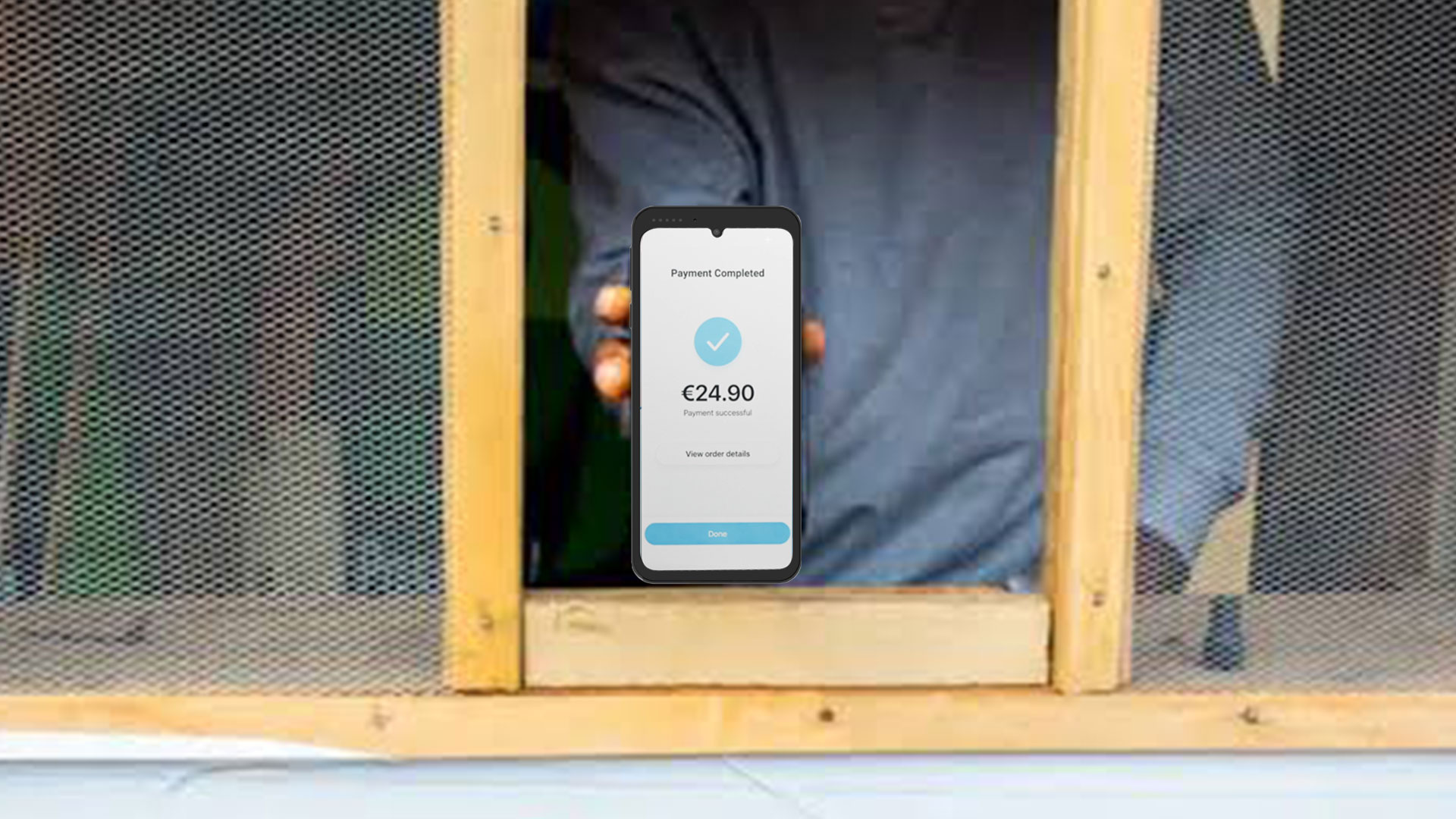
In much of Africa, a bank branch is a counter, a plastic chair and one device. Whether that counter opens on Monday depends less on the banking licence than on whether the hardware survives a twelve-hour day. The scale of the dependency is now public: OPay, in the filing prepared for its New York listing, reported that it had cumulatively dispatched 1.3 million POS terminals and reached 50.1 million monthly active users by mid-2026. In Angola, Unitel Money reports more than two million users served through more than 35,000 agents.
Those numbers describe a category of trade that did not exist a decade ago, and it runs on terminals carried from a lock-up to a roadside table every morning.
Walk into an agent point at opening time and the sequence is always the same. The float comes out of a metal box and gets counted twice. Two or three wallets are checked for balance. A card terminal is placed at an angle where the customer can see the amount. A notebook, or increasingly a phone, records every transaction in case the platform disputes one later.
Then the day starts, and the counter switches between jobs every few minutes: cash-in, cash-out, airtime, an electricity token, a school fee, a card payment from a customer who does not use wallets at all. Each of those is a different channel, often a different scheme, occasionally a different network.
An agent earns from the number of services completed per hour, not from the size of the float. Every minute the counter is closed for a reason that is not a customer is revenue that cannot be recovered, because the queue simply walks to the next kiosk.
The counter closes when the battery does. A terminal with a sealed battery has to be tethered to a socket to keep working, which turns a roadside table into a fixed counter and stops the agent from taking the device to a customer waiting in a car.
One network outage stops every service. A single-SIM device with no fallback turns a routine outage into a closed counter, even when a second operator's signal is fine.
Program credentials are the quiet bottleneck. Serving several schemes from one counter requires secure element slots for each program. A device with a single SAM position forces the agent to choose which program to support that day, or to keep a second terminal in the drawer.
Device sprawl eats the margin. Cash-in on one terminal, cards on another, airtime on a phone: three batteries, three chargers, three reconciliation sources, and a counter that is 1.5 metres wide.
Reconciliation becomes guesswork. When transactions are logged across several devices and a notebook, end-of-day totals rarely match the float, and the difference is usually absorbed by the agent.
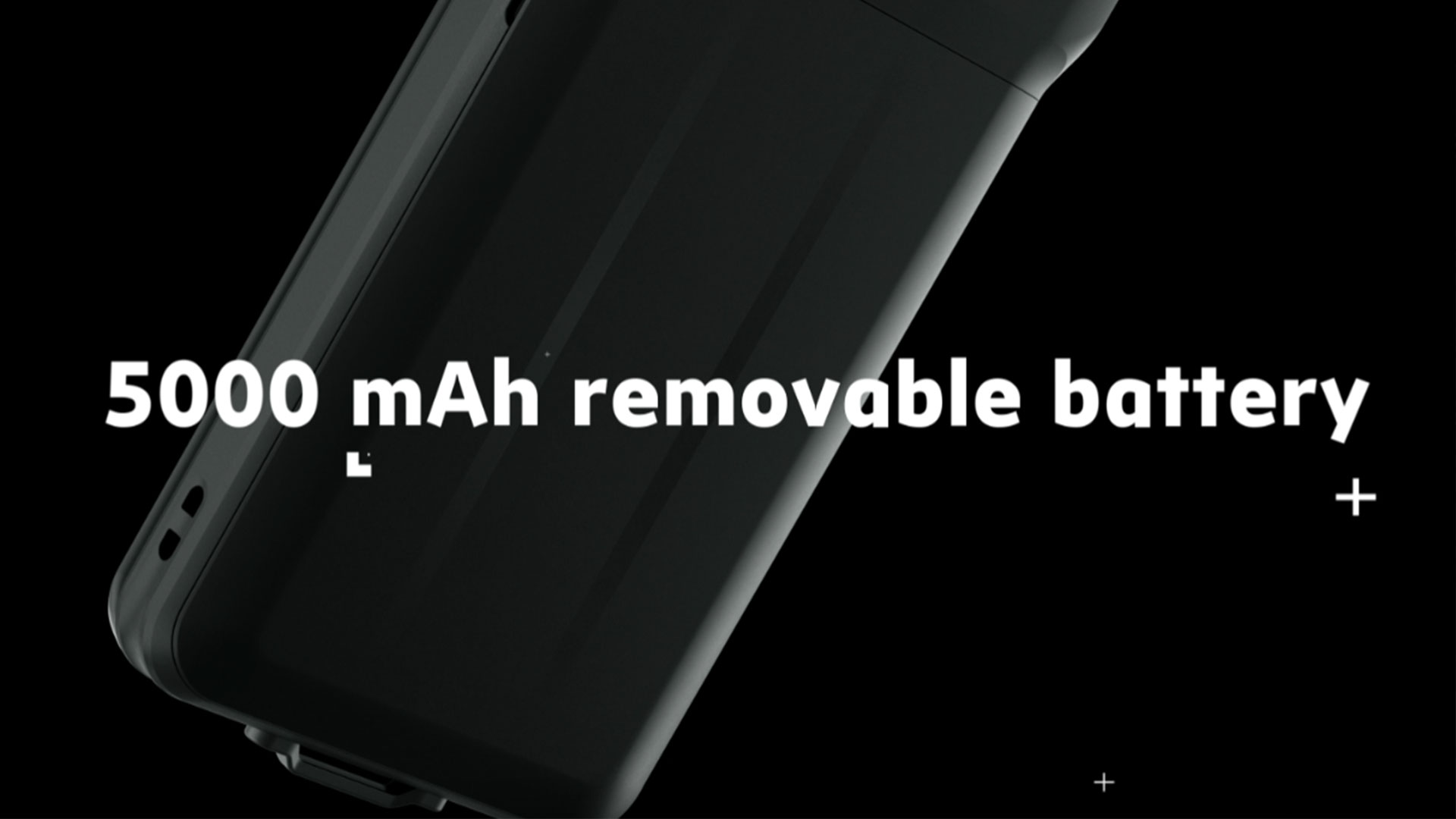
A counter that stays open is built from three things: a device that carries several channels, a power routine that does not depend on a wall socket, and a record that reconciles itself at closing time. The i9600 Mini was specified around that combination.
No public agent-level deployment data exists for this configuration, so the following is a reference benchmark derived from the hardware specification — the operating pattern the device is built to make possible, not a measured customer result.
| Moment | Reference target | What makes it possible |
|---|---|---|
| Opening | Counter ready in under 5 minutes | One device for all channels; no second terminal to pair |
| Midday | No closure for charging | Removable battery plus a second pack on the shelf |
| Network outage | No interruption to wallet service | Second SIM or eSIM on a different operator |
| Card customer | Card and wallet in one queue | PCI PTS 6.x, EMV L1/L2 and contactless on the same device |
| Closing | Float reconciles from device records | Single transaction log per counter |
The pattern worth copying is not any single number. It is that each row removes a reason to close, and closing is the only cost an agent cannot price into a commission.
Provision both SIM slots before rollout. Decide which operator fills the primary slot and which fills the backup, and confirm the eSIM variant with the operator if you plan to activate remotely. A backup slot that is empty on day one stays empty.
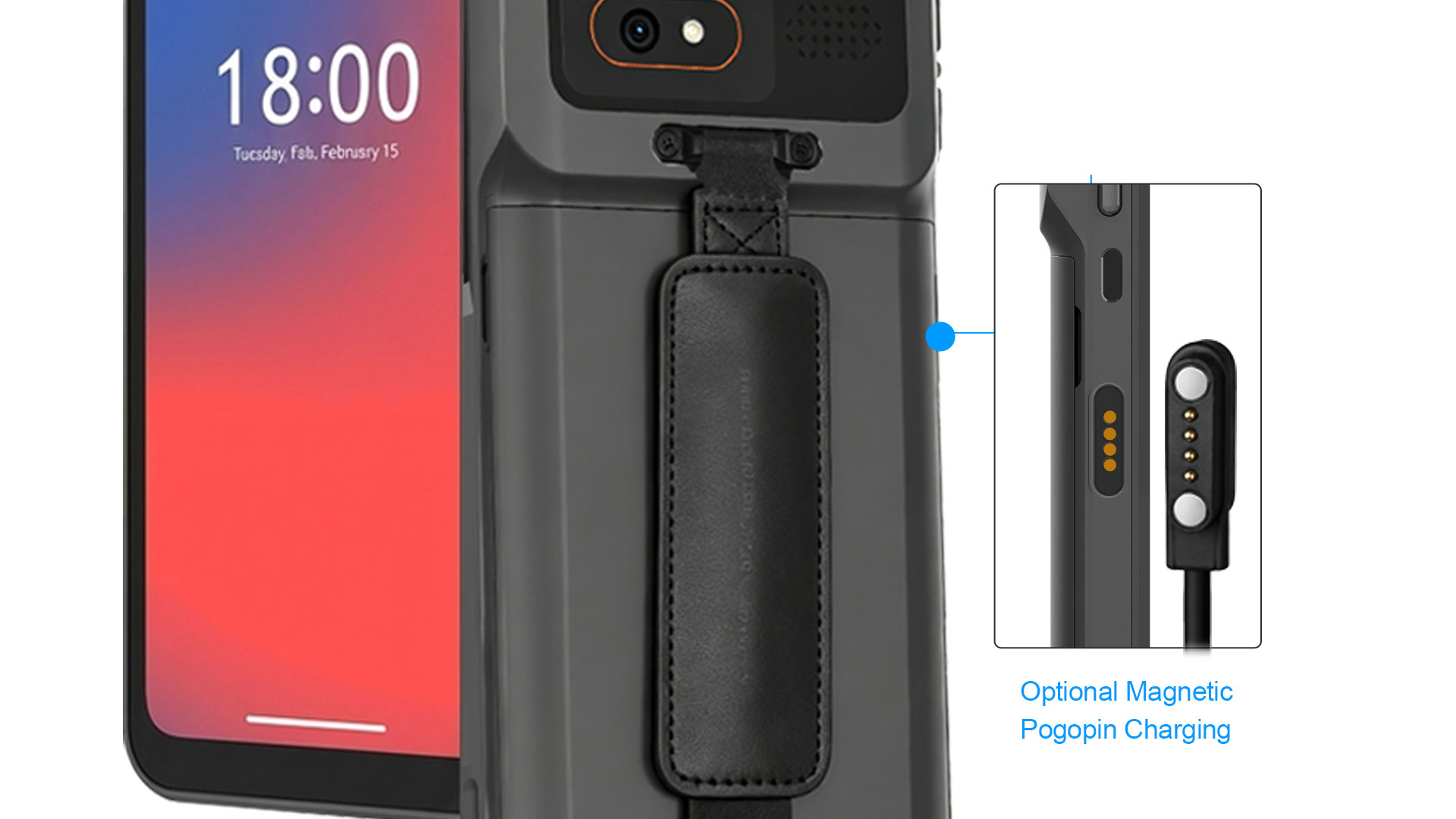
Set a battery rotation rule, not a charging rule. Two packs per counter and a magnetic Pogo dock for overnight charging is the minimum. Agents who treat the battery as consumable keep the counter open; agents who treat it as fixed learn to close at 60 percent.
Match the scheme credentials to your program mix. Map SAM1 and SAM2 to the two programs your agents actually run, and document which program sits in which slot before devices ship — otherwise every agent invents a different arrangement.
Confirm application support with the acquiring side. The terminal carries PCI PTS 6.x and EMV Level 1 and Level 2 certification, but the payment application and the host integration are decided by the acquirer or the platform provider. Get that confirmation in writing during the pilot, not after the rollout.
Use Android's OEMConfig path for provisioning. Fleet settings, application installation and network configuration can be pushed through OEMConfig-compatible EMM tooling, which avoids hand-configuring hundreds of units before a launch.
Plan the accessories with the rollout. Hand strap, Kensington lock point, silicone keypad and screen protector are specified for this terminal; an agent point without a lock point tends to lose devices before it loses customers.
Pilot in the worst location, not the best. The counter that tests the device should be the one with the weakest signal, the longest queue and no shade. A configuration that survives there will survive the rest of the network.
Across a continent where the branch network is a table and a terminal, the specification decision is the network decision. Choose a device that removes reasons to close, and the agent's commission — and the customer's access — follow from it.
Talk to our team about the i9600 Mini configuration that matches the number of programs, networks and shift hours your agents run.
Tell us how many networks your agents serve, how long a shift runs and how they get cash to the counter. We will map the configuration that fits.
Talk to our team +86-13827760889
 info@wepoy.com


Our Products

Industries
About Us


 Spanish